(An abridged version of this text was presented to the Bournemouth Writing Festival on 13th November 2025 – on the occasion of Robert Louis Stevenson’s 175th Birthday)
The Trust was formed over 20 years ago after Bristol’s first Great Reading Adventure featured Robert Louis Stevenson’s [RLS] Treasure Island in 2003. A huge success, it was taken to schools and picked up by the whole city; it was a real celebration of the only world-renowned novel that strongly features Bristol.
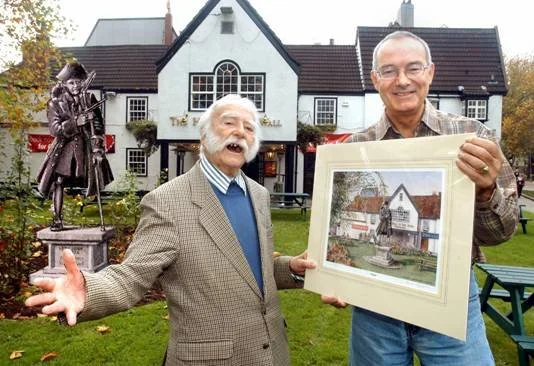
The Trust’s primary aim is to make more of Bristol’s literary and maritime past using Stevenson’s maritime masterpiece as its lynchpin. On launch we recruited Trustees and started fundraising, initially to create a statue of Long John Silver. To add credence, we became a registered charity.
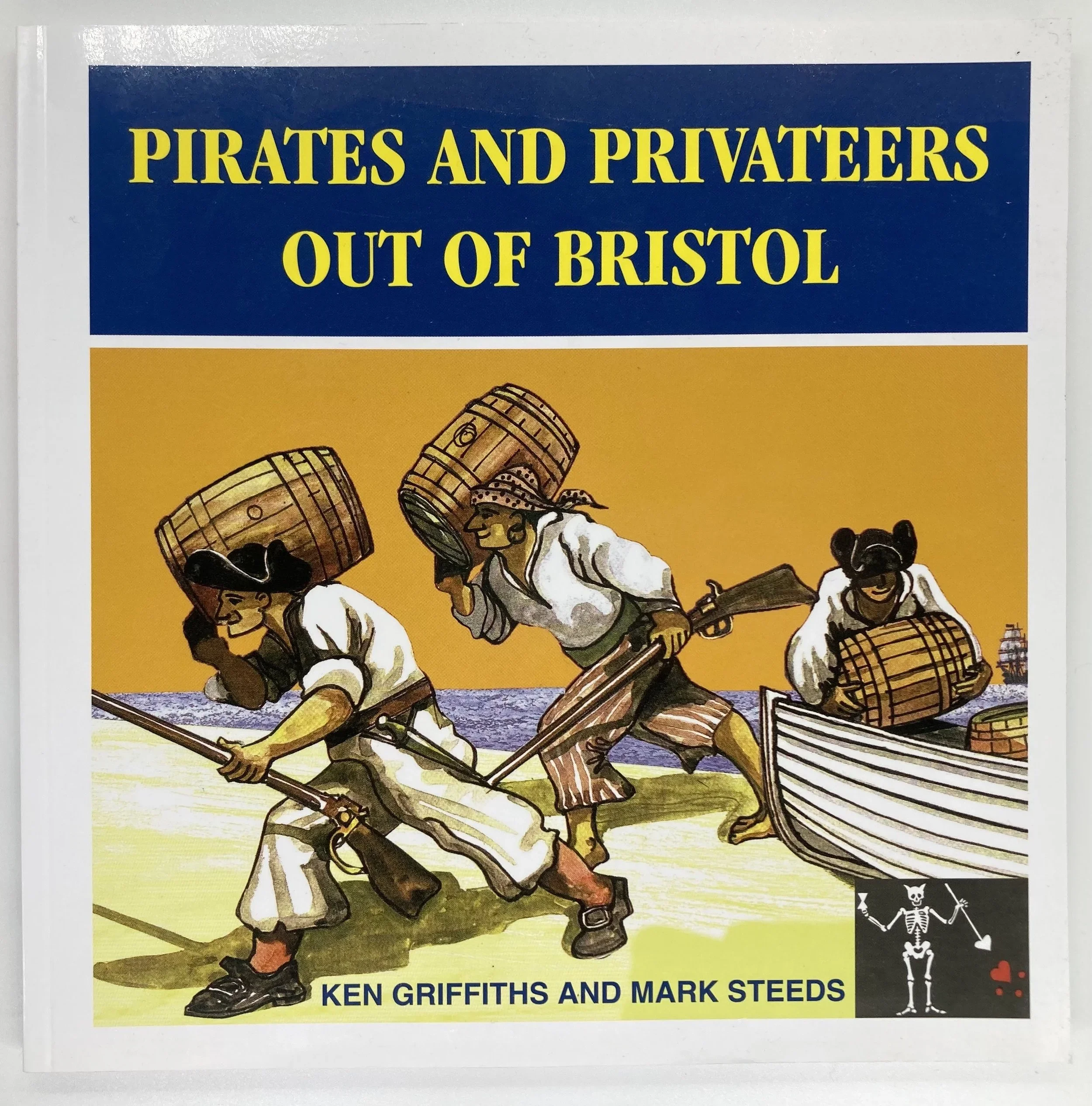
We commissioned Bristol maritime artist Frank Shipsides to create a limited-edition print of what a statue might look like outside a real dockside pub (he became our first patron) and followed this with a book entitled Bristol’s Treasure Island Trail, where we created a walk around Bristol’s ancient port, combining the story, history and locale. We followed it a few years later with Pirates & Privateers out of Bristol with Fiducia Press.
Amongst other things, the books explored the city’s literary links with classics such as Robinson Crusoe and Gulliver’s Travels, and attracted more patrons; Sebastian Peake (son of artist Mervyn Peake) who allowed us to use his father’s brilliant Treasure Island illustrations; and Nicholas Newton, son of the great actor Robert Newton who played Silver in Disney’s live action version of Treasure Island in 1950. Newton’s Bristolian pirate accent led to International ‘Talk like a Pirate Day’ each September.
We also explored Stevenson’s inspirations for Treasure Island, for example his friend William Ernest Henley – who Silver was partly based upon, and Scottish author Tobias Smollett who gave his name to the captain of the Hispaniola. We raised more funds and created a physical Trail of eight locations – pieces of eight – which as stated incorporated people and places from Bristol’s past and meshed them with the story of Treasure Island.
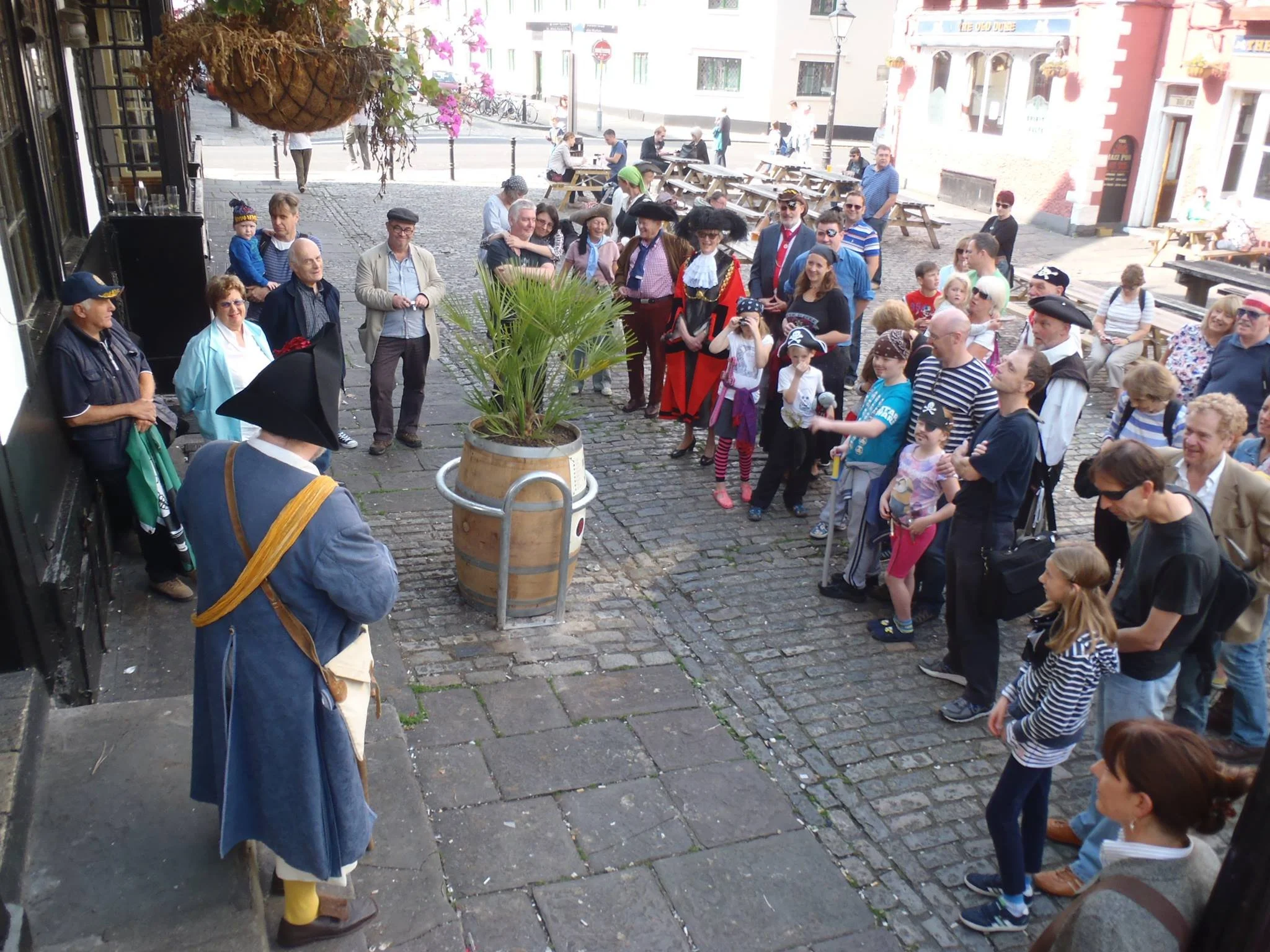
The Trail consists of oak wine barrels from Bordeaux as planters, secured in place with cycle stands and resplendent with palm trees in each. They have their own Treasure Map, a Bristol concept which originated in the city in 1810 and was nicked by Edgar Allan Poe and then Stevenson.
We looked at Stevenson’s life in order to ask the question “Why Bristol?”, and think we found the answer; RLS had befriended Bristol classicist John Addington Symonds in Davos, and he had written his own history of Bristol which included pirates and privateers.
Born in Edinburgh in 1850, Stevenson was in Davos for his health. He had been a poorly child, confined to bed, and read extensively. As a result, he was so enamoured with literature that he went against his dad’s wishes of becoming a lighthouse engineer, hoping to become a writer himself.
For health reasons the Stevenson family travelled extensively throughout Europe, and this inspired RLS to do the same as a young man. He first found fame writing travelogues, starting with An Inland Voyage – a canoe adventure from Antwerp to Paris using the canals and rivers of Belgium and Northern France. His second was Travels with a Donkey, through the Cevennes in France with his stubborn companion Modestine, the donkey. His breakthrough work though was about to come: - Treasure Island.
After initially meeting Symonds in Davos, Stevenson had returned to Scotland to introduce his new wife Fanny to his parents. They went on holiday together to Braemar and here he started his novel to break the boredom of persistent rain. With an old paintbox, RLS created a Treasure Map to amuse his stepson, and then started creating characters to populate it. A commission and writers bloc followed in quick succession and he had to finish the book back in Davos, much to Symonds’s surprise – he had wanted to do a joint classical book with Stevenson.
In 1881 it was serialised in Young Folks magazine as the Sea Cook and then came out in book form in 1883 as Treasure Island. The characters Stevenson created would become immortal; Young Jim Hawkins to the fore - his mother ran a west country inn on the coast called the Admiral Benbow. They were beset by pirates, first Billy Bones with his treasure chest and bawdy songs; malevolent Blind Pew, pursuing Bones and presenting him with the ‘Black Spot’; Jim’s friends Doctor Livesey and Squire Trelawney. All of them come to Bristol and encounter one-legged Long John Silver at his pub the Spy-Glass Inn, complete with his famous parrot Cap’n Flint. Silver recruits most of the crew including fearful swabs such as Israel Hands, Jim’s nemesis - to the chagrin of ship’s captain Smollett. Later, on Treasure Island itself, Jim was to encounter “the man on the island”, skittish Ben Gunn, who had been marooned for three years and had gone slightly mad.
It was an instant success, and with one hundred jingly jangly pounds in his pocket, Stevenson looked around for a permanent home for his new family and found it in the south coast health resort town of Bournemouth. They duly arrived in July 1884 and stayed in various hotels before finding their dream home, Skerryvore (named after one of the Stevenson families famous lighthouses) - a wedding present to Fanny Stevenson from RLS’s father.
Once again though ‘Bluidy Jack’ (coughing up blood) manifested itself and made Robert’s life a misery and while seriously ill and confined to bed, he was proffered mind bending drugs which may or may not have had a bearing on his penning two of his masterpieces – The Strange Case of Dr Jekyll & Mr Hyde and Kidnapped. He wrote and published a host of other material as well, including A Child’s Garden of Verses, all the while becoming a serious author in the eye of the public. It was at this time, when bored in bed, he penned ‘All the places where I have slept’ - Bristol was on the list.
After establishing the Long John Silver Trust [LJST], we became members of the RLS Club of Edinburgh, and through them helped with the formation of the European Cultural Route [ECR] “In the Footsteps of Robert Louis Stevenson” in 2011. European Cultural Routes are an initiative by the Council of Europe, and Britain is a full member. The main tenants of the cultural routes are to maintain principles such as human rights, cultural diversity, cultural democracy and mutual understanding and exchanges across boundaries. A perfect fit for Bristol, Bournemouth and Davos if the latter two decide to join.
Regions were recruited on the basis of the man and his works, hence Bristol’s inclusion, and we have to thank the people of the Cevennes where RLS had penned Travels with a Donkey, who got the ball rolling. Belgium and the Canal du Nord region of France followed (An Inland Voyage) and were joined by the Fontainebleau region (where RLS enjoyed the company of artists and writers in Barbizon and Grez sur Loing, where he met his wife Fanny). Scotland’s Edinburgh, North Berwick and Highlands came on board as well. Accreditation came in Bristol in 2015, one of our proudest moments, and since then we’ve been joined by Bad Homburg in Germany and Menton in France.
Despite some resistance back in Bristol from the powers that be to permanent recognition of our Trail around the city (such as plaques or markers), we recruited more patrons; Former Bristol Lord Mayor and chair of the Matthew of Bristol Trust, Royston Griffey. BBC Radio Bristol presenter Steve Yabsley and top journalist Eugene Byrne, currently editor of Bristol Times and fervent fan of anti-hero Long John Silver. They all joined our gang of cut-throats.
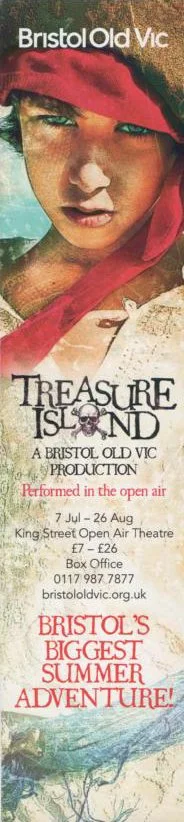
Over the years we’ve had many highlights, not least when we teamed up with Marie Clifford and her production of Treasure Island on board the Matthew, the replica of John Cabot’s sailing ship that explored Newfoundland in 1497. We’ve also supported the Treasure Island efforts of others including Bristol Hippodrome, Bristol Old Vic and Sheila Hannon’s Show of Strength Theatre Group.
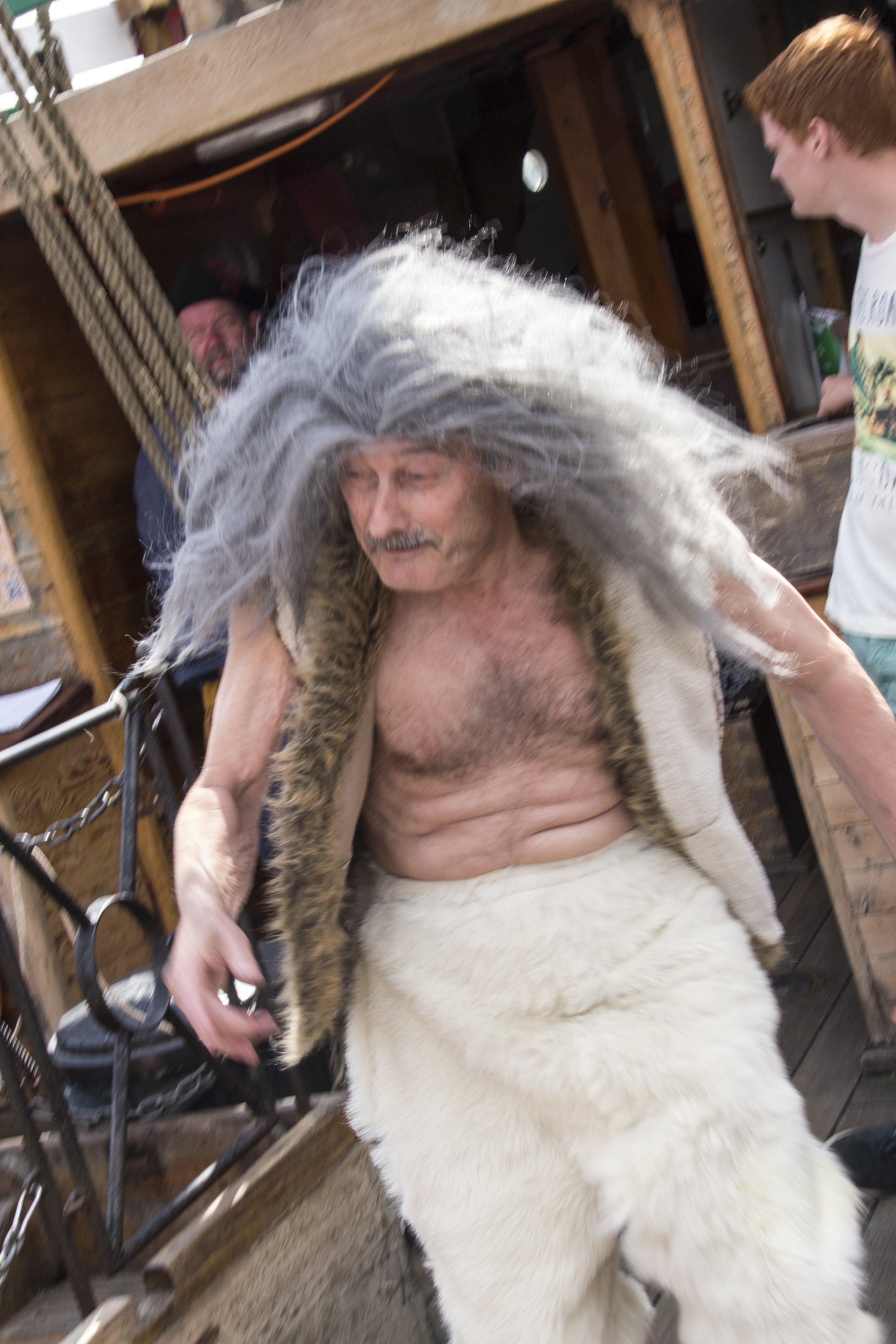
Bill in action as Ben Gunn on the Matthew
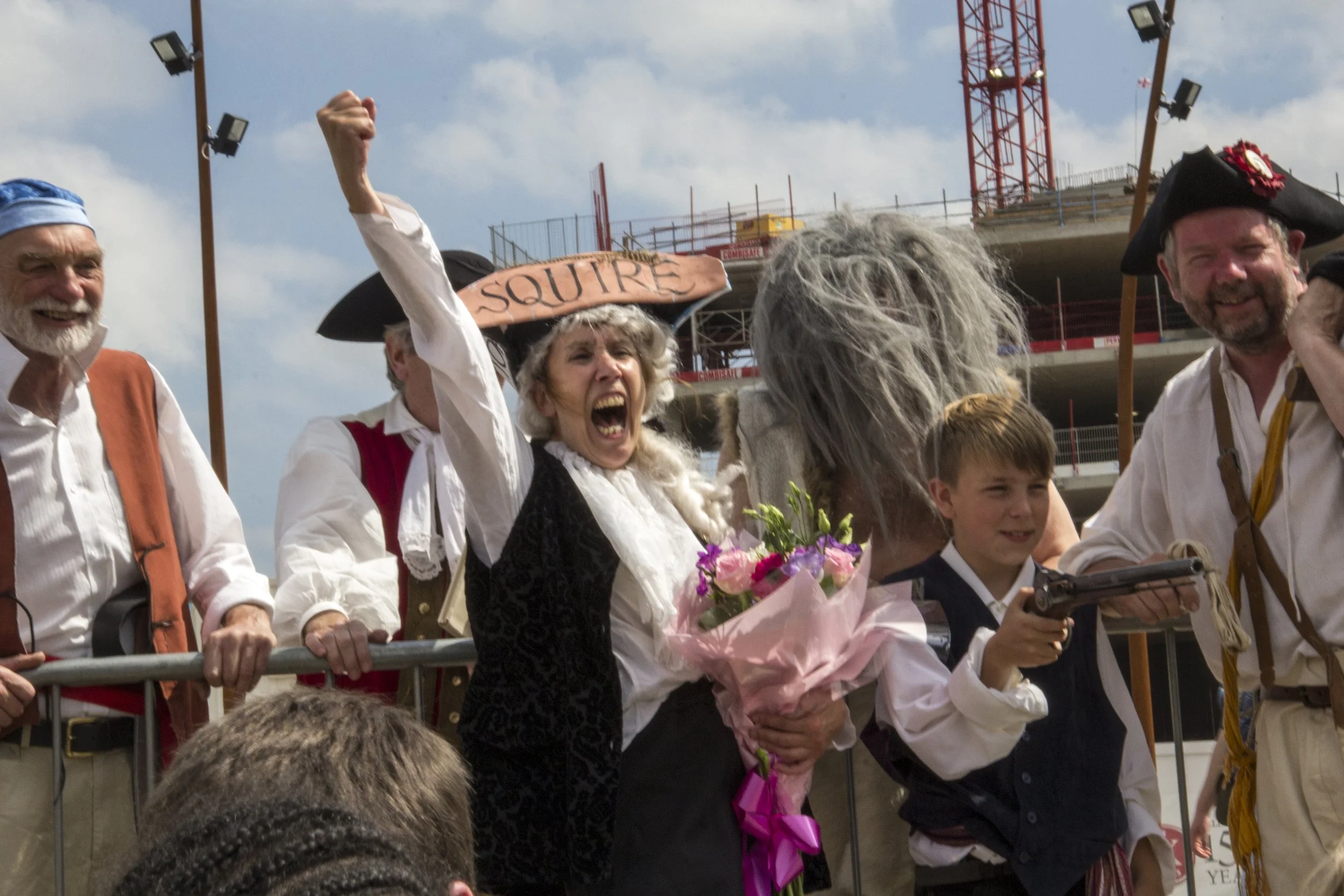
Marie as the Squire
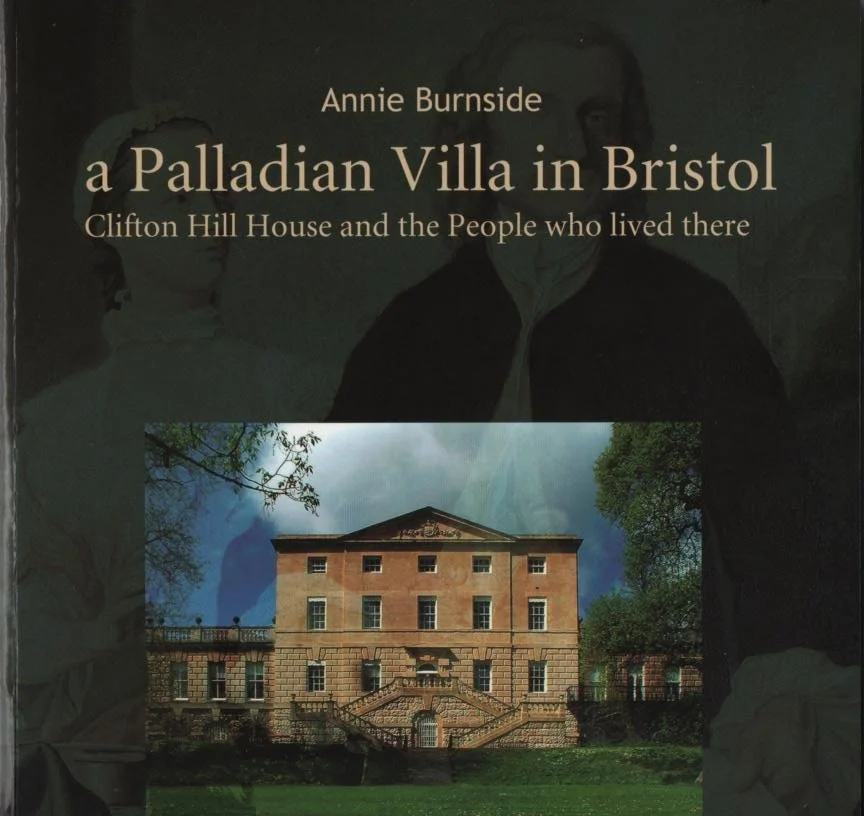
We even helped the University of Bristol celebrate Clifton Hill House, the former home of John Addington Symonds, by assisting Annie Burnside with her book A Palladian Villa in Bristol – Clifton Hill House and the People Who Lived There. This then led us to hosting a major Literary Dinner there with the RLS Club and nascent ECR; Nicholas Newton and Sebastian Peake were guest speakers.
In 2012 we took part in the launch of RLS Day in Edinburgh. An RLS Club event, members of the LJST joined broadcaster John Sessions and comedian Nigel Planer in an all-day reading of Treasure Island at Scotland’s National Portrait Gallery. Since that first Great Reading Adventure we’ve performed abridged versions of Treasure Island, from on board the Brigantia to Bad Homburg, where at the latter we worked alongside German film star Sebastian Koch.
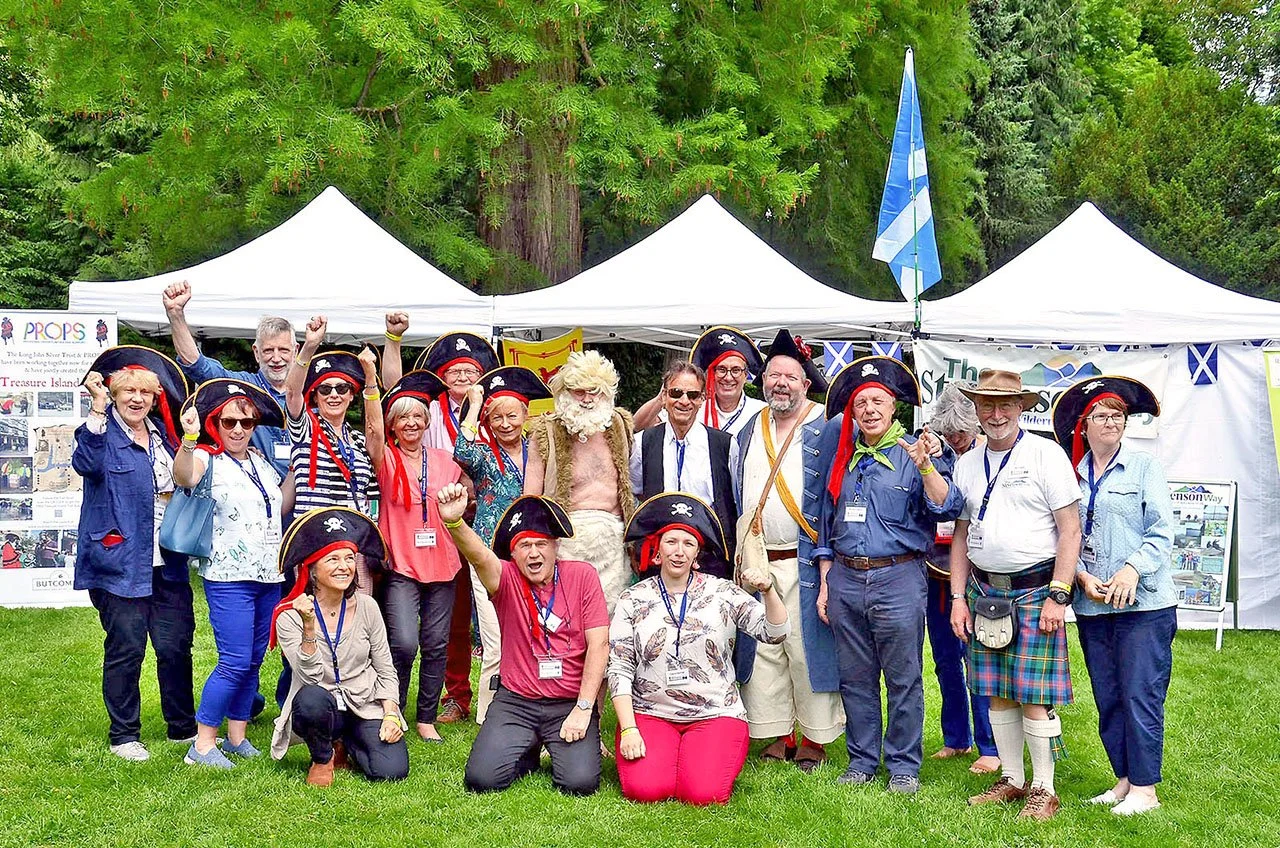
ECR Group Photo
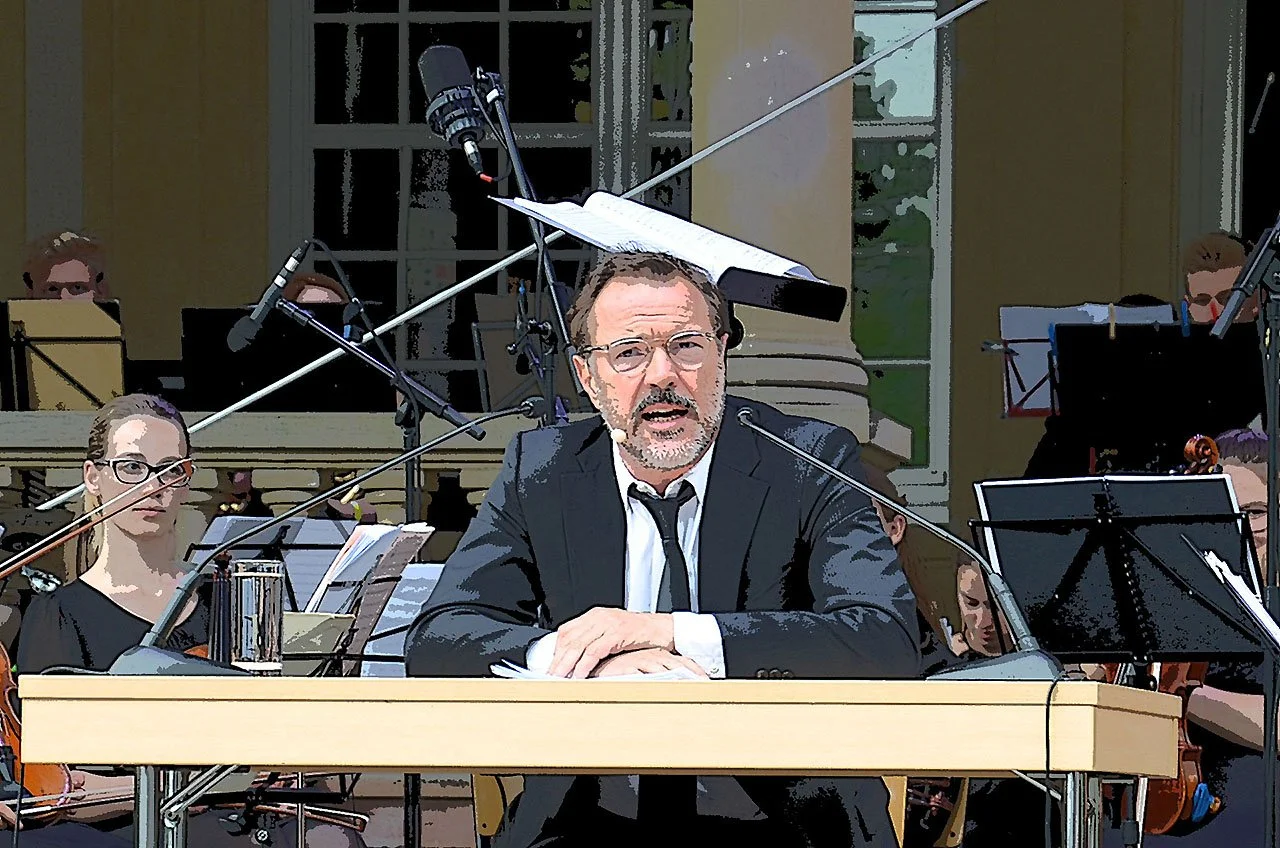
Sebastian Koch
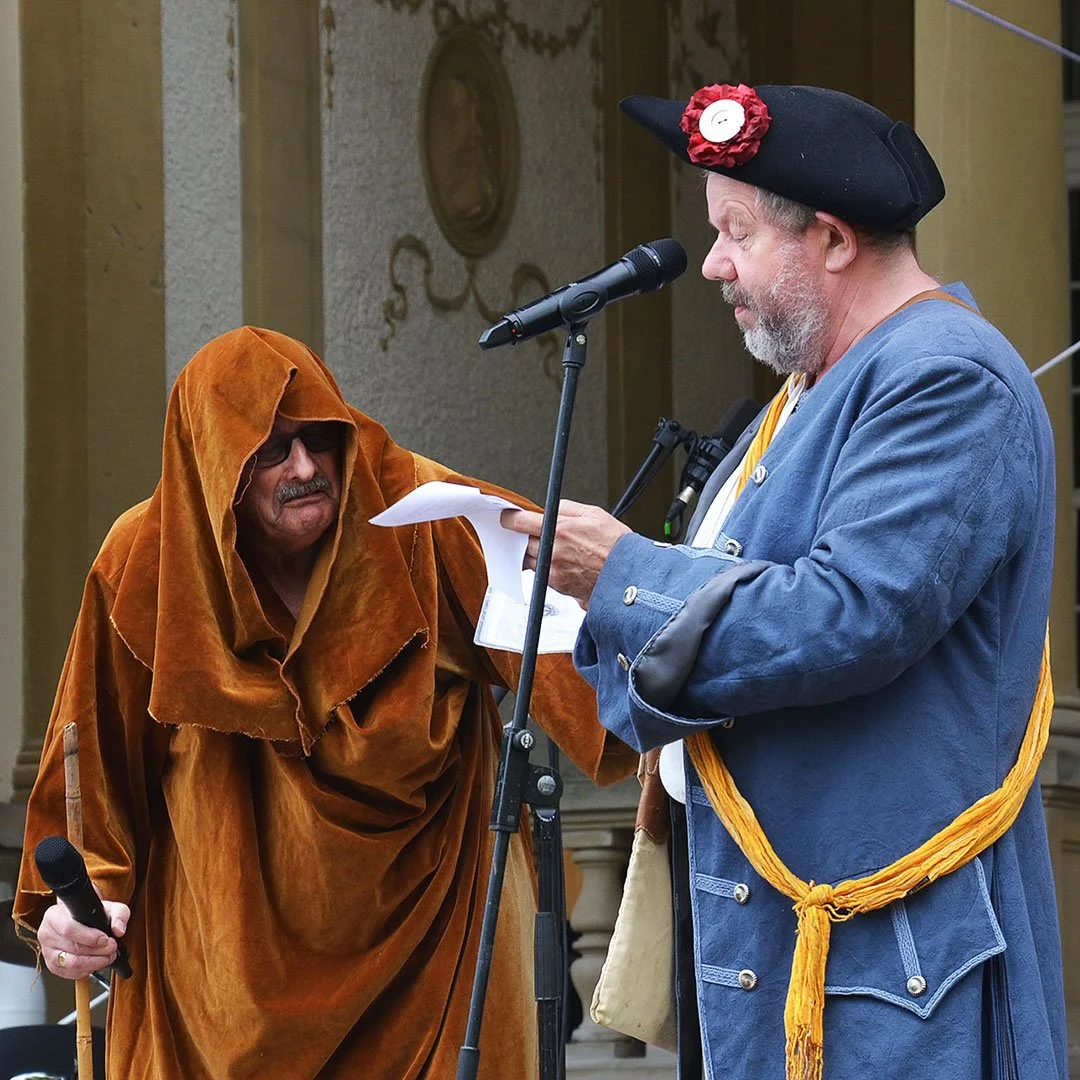
Bad Homburg performance - Bill as Blind Pew and Mark as Long John
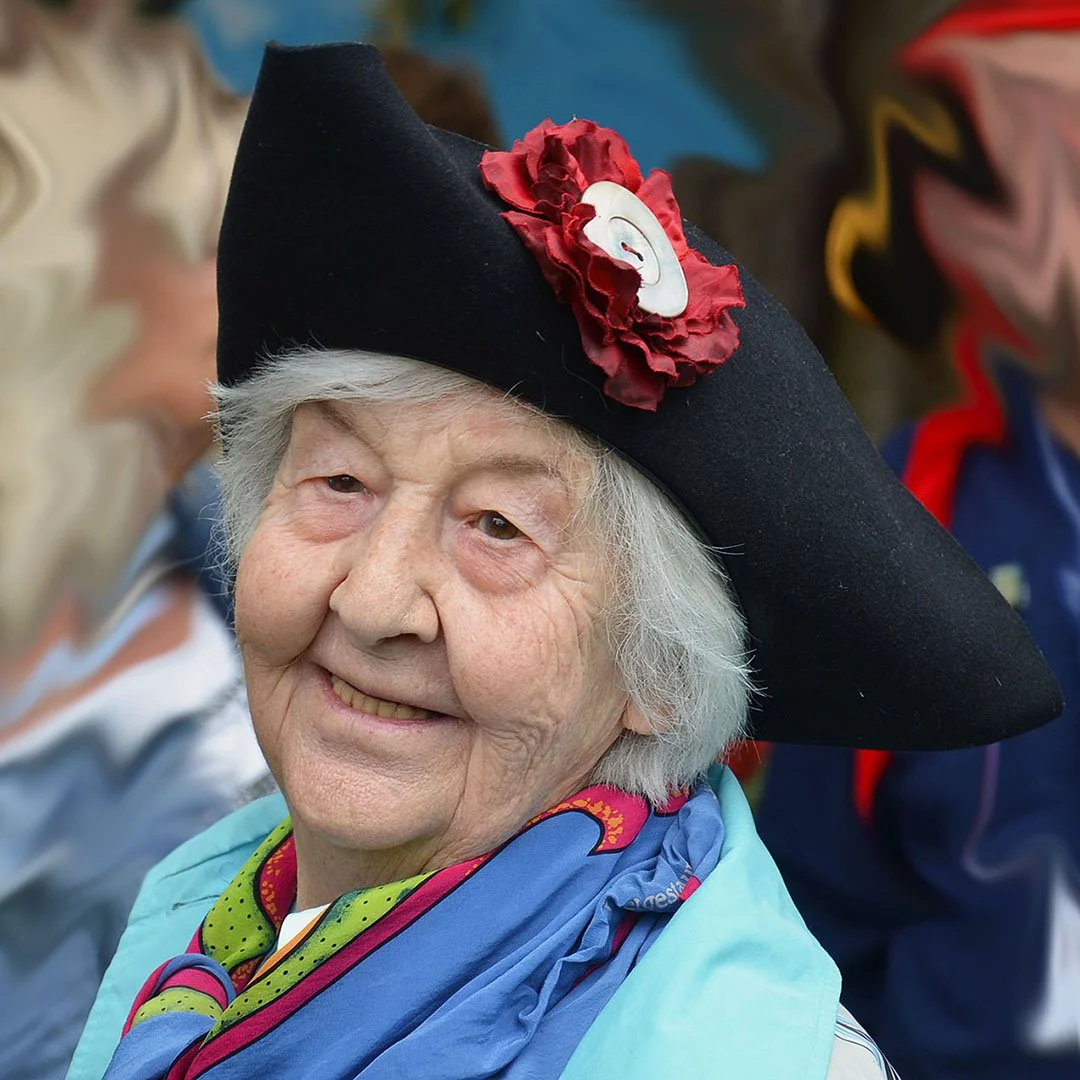
The late German lady Gertha (who did all of the original research regarding RLS in Bad Homburg)
We’ve also appeared on local radio and national television promoting Bristol’s literary and maritime past – BBC’s The Hairy Bikers Pubs’ that Built Britain, Books That Made Britain and Aardman’s The Pirates! In an adventure with Scientists! In addition to that we’ve had tie-ups with three local breweries each supplying their own LJS brew; thanks to Wickwar, Butcombe and Bristol Beer Factory for helping us.
Using our Treasure Island Trail at its core, we helped create the Big Green Treasure Hunt in 2015 in order to promote Bristol’s status as European Green Capital – a huge honour. After that, in 2019, to celebrated Bristol’s 300-year-old links with Robinson Crusoe, we put on a major exhibition at Bristol’s prestigious Central Library entitled ‘Crusoe 300’.
Throughout our existence we’ve worked with educational needs charity Props, based at Vassell’s Park in Fishponds, and done all manner of things together with their post-16 trainees. First and foremost, we used to go around Bristol’s docks celebrating the city’s links with Treasure Island, and then latterly, the trainees helped both create and maintain our Treasure Island Trail.
Another organisation we’ve worked closely with is Bristol Radical History Group [BRHG], celebrating history from below. We helped with their first ever pamphlet and plaque to the great abolitionist Thomas Clarkson on the Seven Stars – the pub that changed the world. An offshoot of that liaison led to the installation of the Wulfstan Windows in St Mary’s Church in Hawkesbury. Saint Wulfstan was the first to get the slave trade banned in Bristol in 1090.

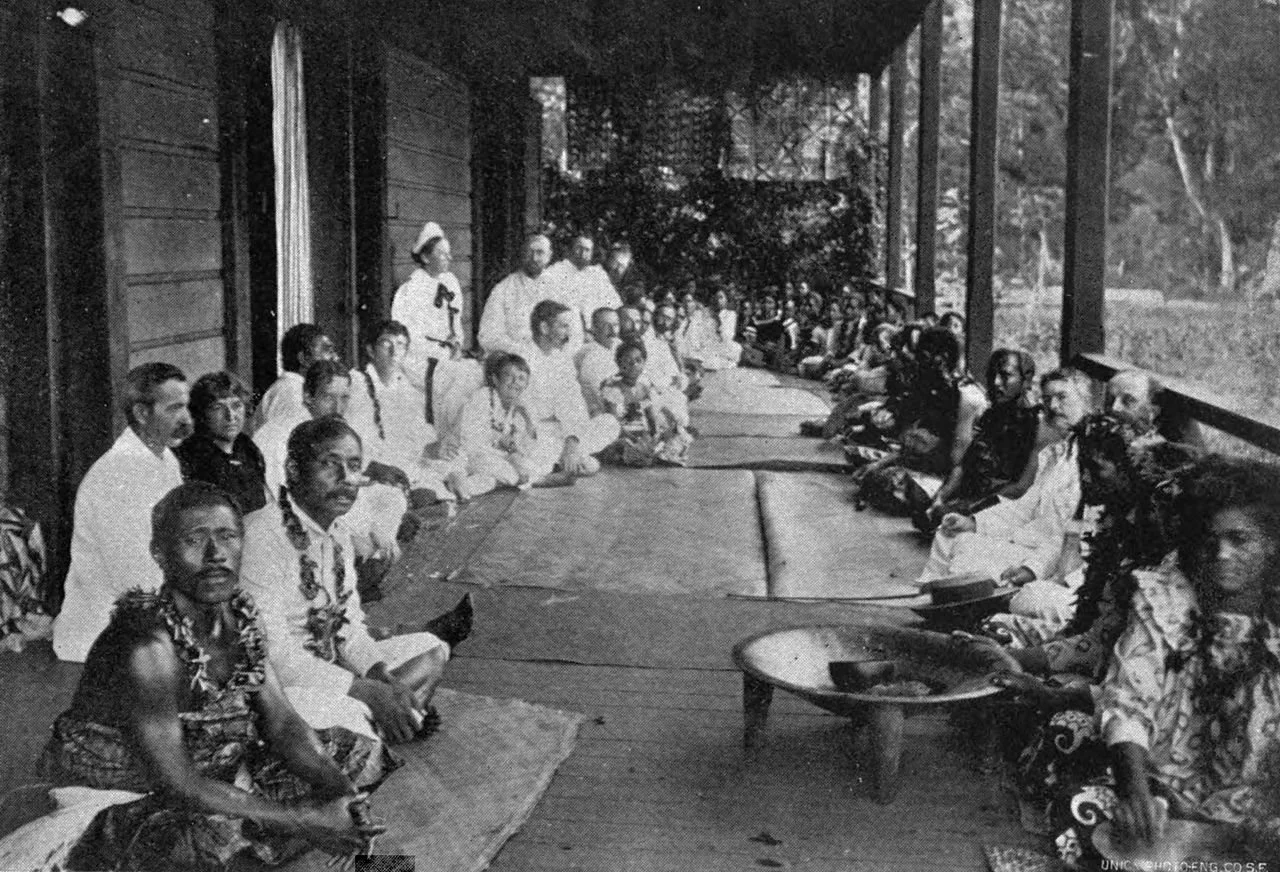
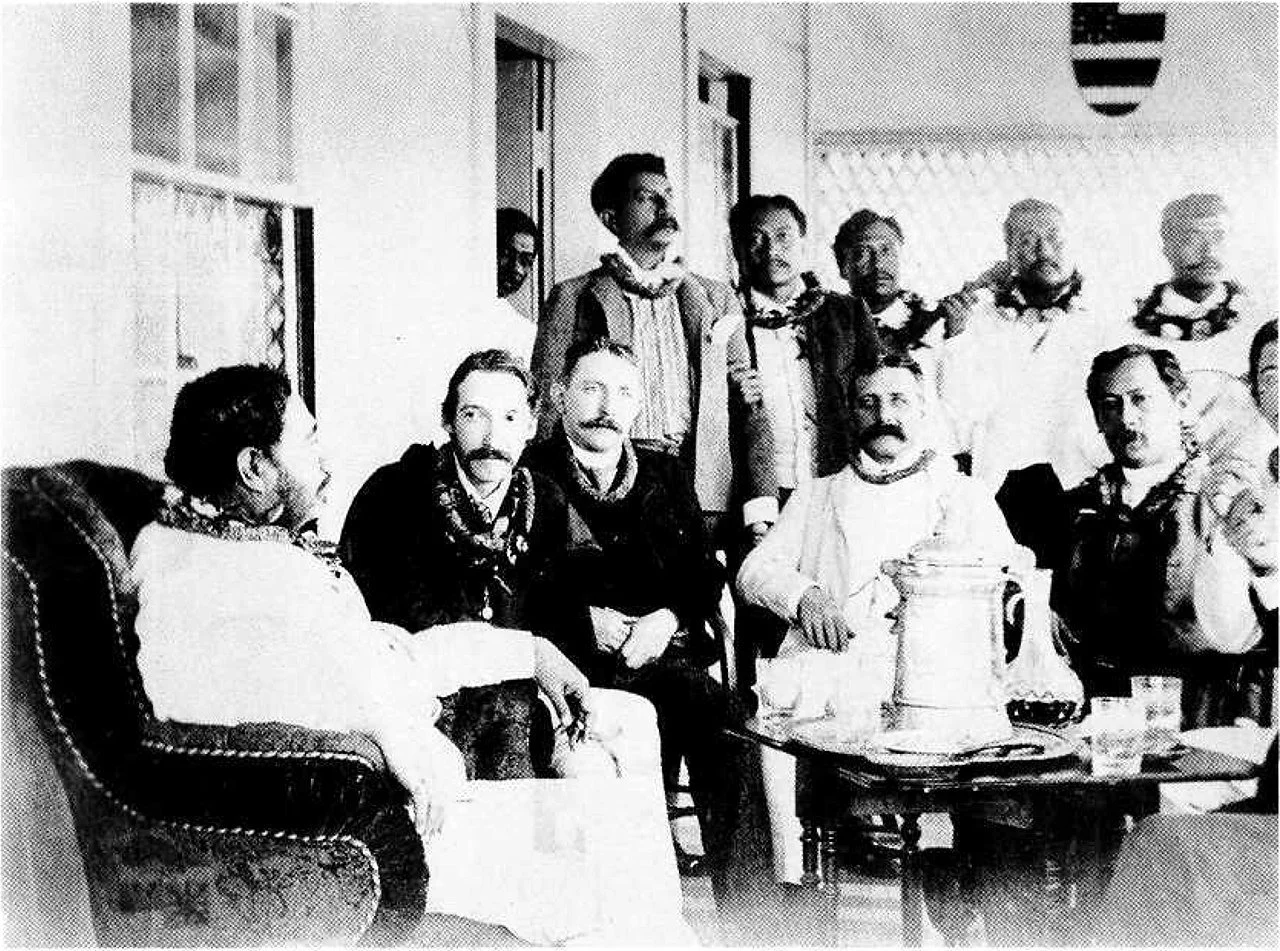

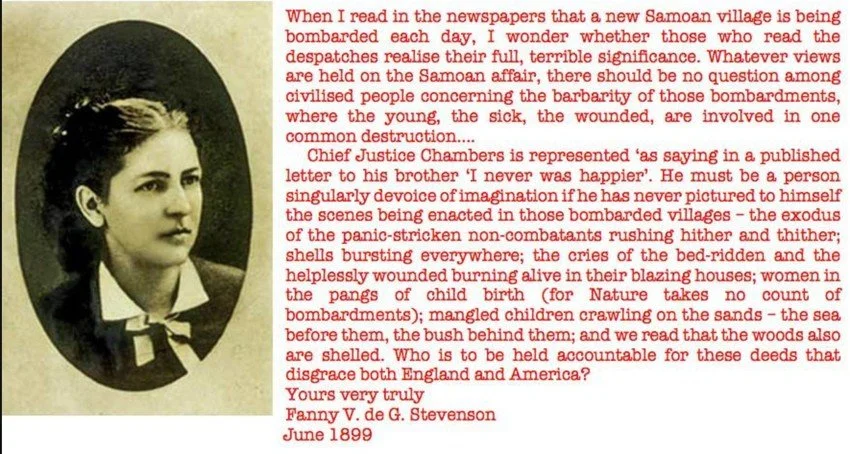
Other research generated with BRHG has examined themes raised by Treasure Island such as piracy and disability, and those of Bristol’s past such as slavery and colonialism. The latter of particular interest to Robert Louis Stevenson during his time in the South Seas.
Stevenson died young in Samoa in 1894 aged just 44, but not before he witnessed Hawaii being subsumed by the US, and Samoa being fought over by the British, Americans and Germans. He sided with the indigenous people and embarrassed the superpowers; in Samoa he was known as ‘Tusitala’ – the teller of tales – and was greatly mourned on his death.
Through working with organisations like M Shed and BRHG, we currently give walks and talks entitled ‘Pirates & Prejudice’ and ‘Abolition’; thought-provoking narratives of the city seldom explored by others. Why don’t you seek us out for 2026?